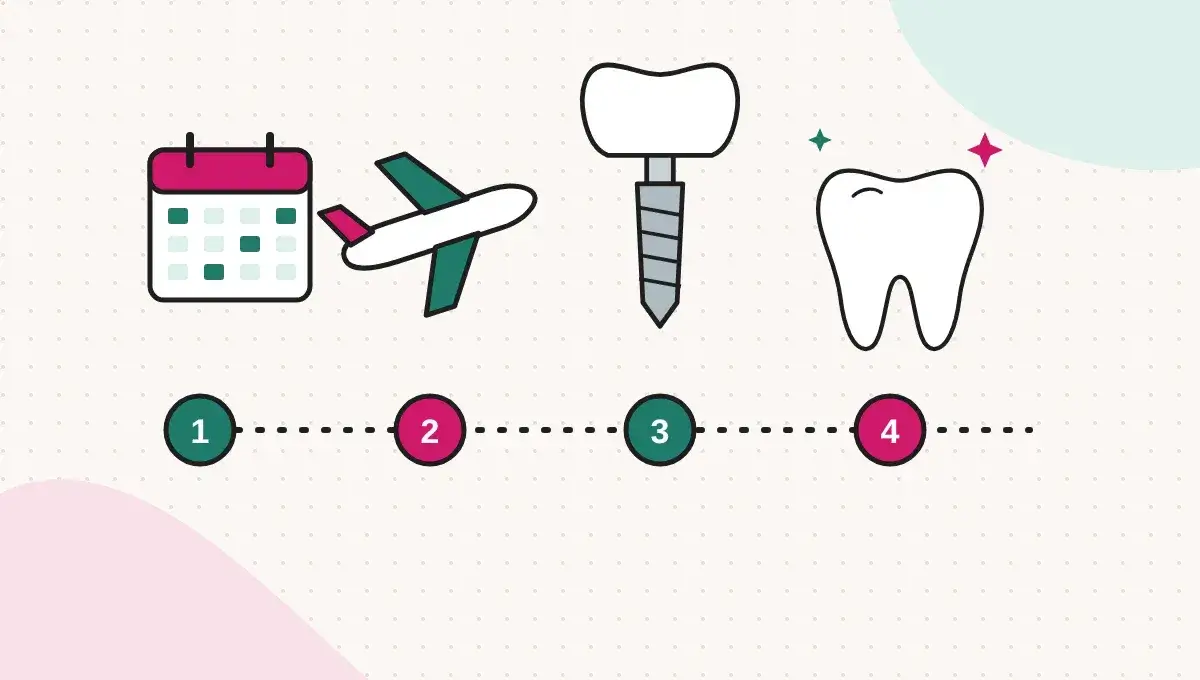
Start with information, not a flight booking
A safe plan begins with your dental and medical history. Share current medication, smoking status, previous implant or gum treatment and any recent radiographs. Photographs can support an early discussion, but the final plan may change after examination and three-dimensional imaging.
Before the first visit
Ask for a provisional written plan showing what is included, what could change, the implant system, temporary-tooth plan and likely number of visits. Arrange enough recovery time and avoid scheduling important work immediately after surgery. Confirm who to contact outside clinic hours.
During the surgical visit
The clinician checks the mouth and scan, confirms consent and explains alternatives. Treatment may include extractions, grafting and implant placement. A temporary tooth or bridge is only fitted when the clinical conditions allow. Swelling and discomfort vary, so follow the personalised medication, hygiene and diet instructions.
The healing period in the UK
Healing continues for weeks or months. Keep to the recommended cleaning routine and avoid smoking. Contact the treating clinic promptly if pain or swelling worsens after initial improvement, a temporary restoration moves, or you develop fever, discharge or altered sensation. Do not wait for a routine return date if something feels wrong.
The final restoration and long-term care
The final crown or bridge is fitted after reassessment. Keep your implant passport, radiographs, component details and invoices. Implants still need professional reviews and daily plaque control. A UK dentist may be able to provide routine care, but confirm this in advance and understand that component availability can vary.
Related: Dental implants in Turkey · Bone grafting for dental implants · Dental records to bring home · Contact us
This page is general information, not a diagnosis. Treatment suitability, timing and alternatives can only be confirmed after clinical examination and imaging.